

Brand Kit is where you give Meridian the context it needs to write about your brand correctly. When Brand Kit is filled out, briefs and articles are typically less generic, your positioning is clearer, and the content is less likely to include inaccurate or overconfident claims. Brand Kit is especially important if you use Content to generate briefs/articles, because the system will use this information to decide what to emphasize (and how to say it).
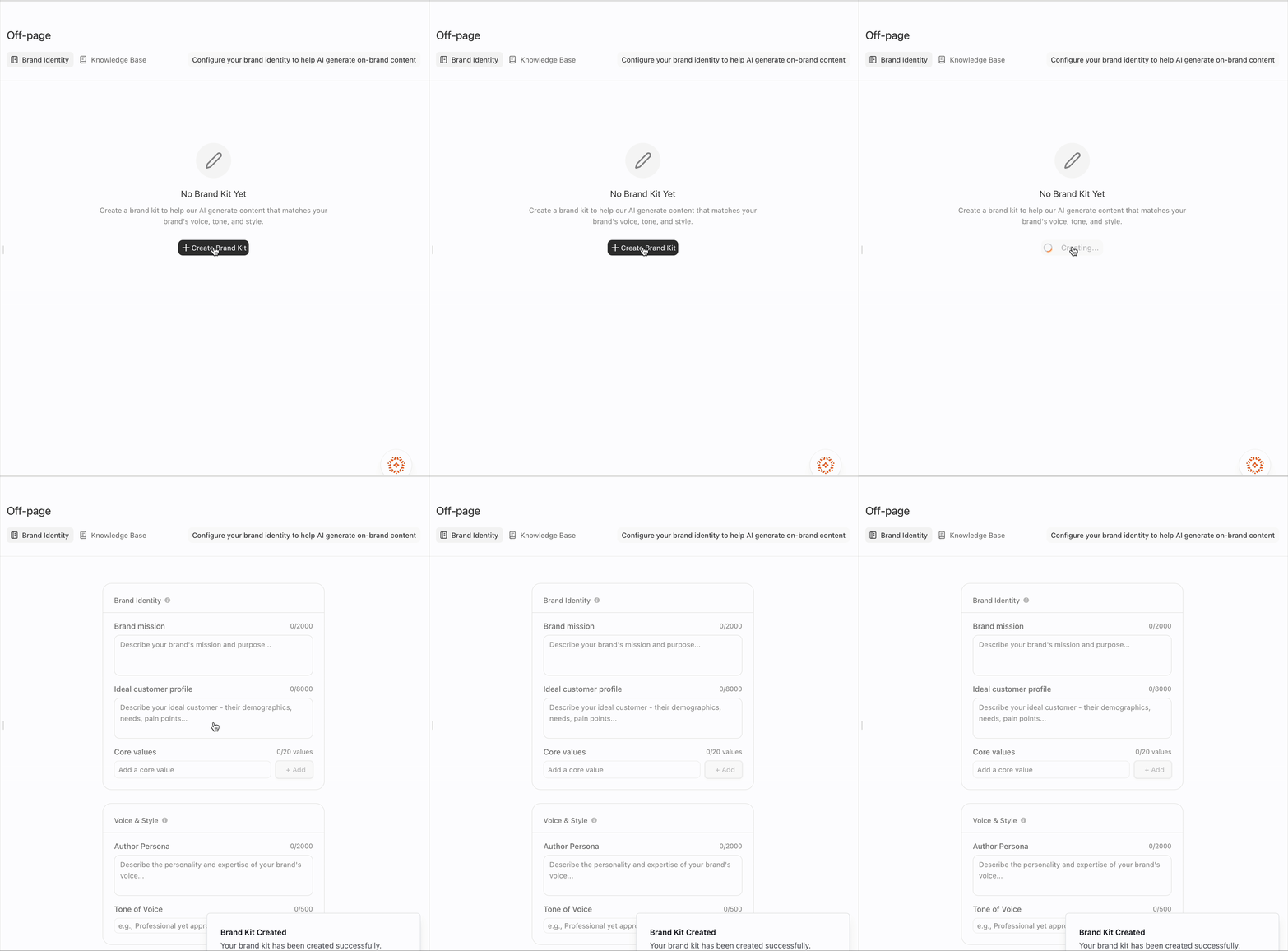
If Brand Kit is vague, generated content will be vague. If Brand Kit is specific and evidence-backed, generated content will be specific and evidence-backed.
What Brand Kit affects
Brand Kit is primarily used in:- Brief generation (what angle to take, what to emphasize, what to avoid)
- Article generation (tone, terminology, claims, and examples)
- Refinements (keeping updates consistent when you request changes)
- consistency across writers and stakeholders,
- reducing risky phrasing in regulated or sensitive categories,
- and improving how clearly your differentiators show up in “best X” and comparison-style content.
How Brand Kit is organized
Brand Kit typically includes two kinds of inputs:- Structured fields (quick, high-signal inputs like mission and voice)
- Knowledge Base (longer context you want Meridian to reference like competitive positioning, differentiators, policies, and proof)
1) Fill out the core fields (fast, high leverage)
Brand mission
Write 1–2 sentences describing what you do and why you exist. Keep it specific. Good:- “We help teams measure and improve how AI assistants mention, rank, and cite their brand and products.”
- “We help businesses grow.”
Ideal customer profile
Describe who you are for in plain language (role + company type + use case). Examples:- “In-house growth and SEO teams at DTC brands.”
- “Marketing teams at SaaS companies that care about AI discovery.”
Core values
Add 3–6 values that should show up in tone and framing (for example: accuracy, transparency, customer-first, safety).These fields are short on purpose. They should capture the core identity you want repeated consistently across briefs and articles.
2) Set your Voice & Style
The “Voice & Style” section helps Meridian match your writing style so generated content sounds like you.Author persona
Describe how the writing should feel. Examples:- “Friendly expert. Short sentences. Practical. Minimal hype.”
- “Direct and technical. Focus on definitions, steps, and evidence.”
Tone of Voice
Concrete rules are more useful than adjectives. Good rules:- “Lead with a direct answer in the first 2–3 sentences.”
- “Use bullets for criteria lists.”
- “Use comparison tables when writing comparisons.”
- “Avoid vague superlatives unless you include proof.”
3) Add Writing Samples (strongly recommended)
Writing samples teach Meridian the “shape” of your best writing: tone, structure, headings, and how you explain things.What to include
Add 2–5 samples:- one blog post (your standard tone)
- one product/feature explainer (how you describe your offering)
- one comparison-style piece (if you have it)
- one trust/policy page (if your category is regulated)
Tips
- Use examples that you would be happy publishing again today.
- If a sample is outdated or off-brand, do not include it.
- Shorter and clearer samples tend to work better than long, meandering ones.
4) Knowledge Base (where you add deeper context)
The Knowledge Base is the most flexible part of Brand Kit. This is where you can add detailed information that doesn’t have a dedicated UI field. Examples of what belongs in Knowledge Base:- Competitive positioning (who you compete with and how you differ)
- Key differentiators (with proof, links, and “best for” fit)
- Approved claims / prohibited claims (compliance boundaries)
- Pricing and packaging details (what’s true, what’s nuanced)
- Product specs, feature lists, integration details
- Customer proof (case studies, testimonials, benchmarks)
- Brand guidelines PDFs
Text vs PDF
When you add knowledge, you can choose:- Text: best for structured bullet lists, rules, and frameworks you want Meridian to quote cleanly
- PDF: best for existing brand guidelines, one-pagers, policies, or longer documents you already maintain
If you want Meridian to consistently reflect your differentiators or competitive positioning, put them in the Knowledge Base as a Text item. It is easier for the system to reuse clean bullet rules than to infer them from marketing pages.
Recommended Knowledge Base items (templates)
A) Competitive positioning (Text)
Use this format:- Competitors we’re compared to: A, B, C
- When we win: (3–6 bullets with criteria)
- When we’re not the best fit: (2–4 bullets; honest trade-offs help)
- Language to use: (preferred phrasing)
- Language to avoid: (phrasing that is misleading or risky)
B) Differentiators + proof (Text)
- Differentiator
- Why it matters
- Proof (URL or document reference)
- “SOC 2 audited” → “Trust / compliance” → link to trust page
C) Claims and boundaries (Text)
- Approved claims: (bullet list)
- Disallowed claims: (bullet list)
- Claims that require exact wording: (bullet list + required phrasing)
D) Product/feature facts (Text or PDF)
- A canonical feature list
- Integration support
- Constraints/limitations (so content doesn’t overpromise)
How to keep Brand Kit useful
Brand Kit is most effective when it stays current. Recommended maintenance:- Update it when pricing, product features, or policies change.
- Add new proof points when you publish authoritative pages.
- Add a Knowledge Base note when you notice repeated inaccuracies in generated drafts.
- Remove or replace writing samples that no longer match your voice.
If you have multiple Knowledge Base items that contradict each other, Meridian may produce inconsistent output. Keep one “source of truth” doc per topic (positioning, pricing, claims).
Common mistakes (and how to avoid them)
- Being too generic: “We are the best platform.” Replace with concrete criteria and proof in Knowledge Base.
- No boundaries: If you don’t define prohibited claims, drafts may use overly confident marketing language. Add a “Claims and boundaries” Knowledge Base item.
- No trade-offs: AI answers often rank by trade-offs. Include “when we’re not the best fit” in your competitive positioning.
- Old writing samples: If samples are outdated, drafts will inherit outdated tone and structure. Refresh samples as needed.